Emotional Intelligence Explained
From First Ball To Last — A Short Series on the Emotional Game of Tennis

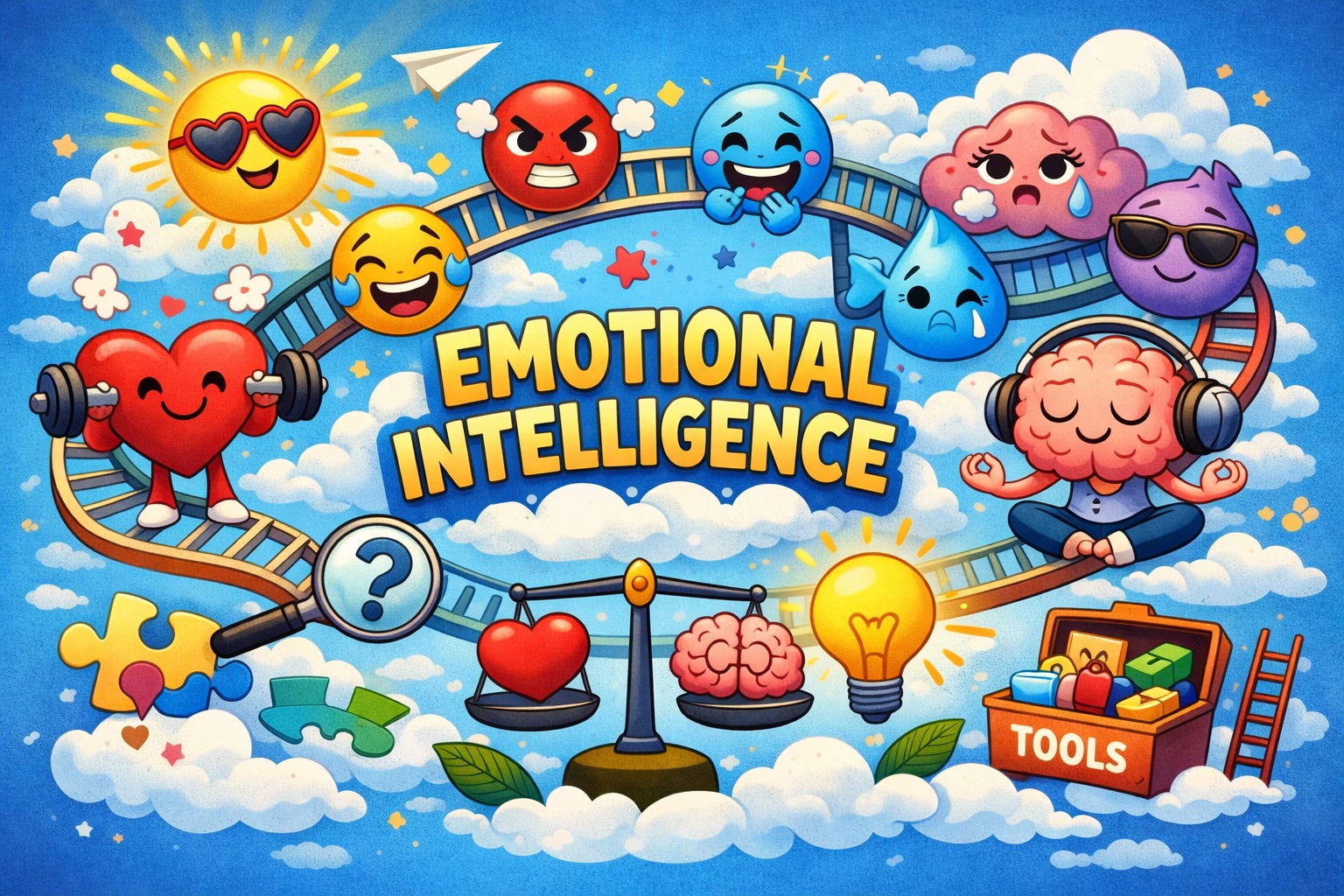
If there is one chapter that most clearly explains the heart of First Ball To Last, it may be this one. Emotional intelligence is the backbone of the entire project — not as a trendy phrase, but as a real and often missing part of the tennis experience. We spend years training strokes, patterns, movement, and tactics. But what about frustration, fear, self-talk, confidence, perspective, and recovery? This chapter begins there.
“It takes something more than intelligence to act intelligently.” — Fyodor Dostoyevsky.
From the moment we can remember, life lines us up by intellect. Second-grade achievement tests, the gifted track or remedial lane, GPAs and SATs, gold stars for smarts, applause for perfect report cards. For generations, the world has sized up our potential by how fast and flawlessly we can solve, calculate, and recall. And yes, raw brainpower has changed the world. Scientific leaps, medical marvels, engineering wonders, technological revolutions—these are the handiwork of the sharpest minds. Our very grasp of reality is built on their brilliance.
But pure intellect is only part of the story, and deep down we all know it. If IQ were the whole equation, every valedictorian would soar, every Mensa member would be living their dream, and every high school science whiz would grow up to rule the world. That’s not how life works. To understand what truly drives success, we have to look beyond numbers and grades.
Think about the people you truly admire—athletes, leaders, friends. There’s always been something more at play than mere test scores, a different kind of intelligence that doesn’t show up on a Scantron. Call it poise, resilience, guts, grace under fire, kindness, perspective. For years, these qualities were brushed off as “soft skills,” treated like nice extras instead of essentials—until you look closer and realize they’re often the very things that tip the scales in careers, and in life.
Emotional intelligence, or EQ, is your ability to notice, understand, and steer emotions—yours and those around you. It means picking up on subtle cues, reading them right, and choosing your response with intention. When you build your EQ, you take charge of your own growth and success, fueling confidence along the way.
Emotional intelligence is not about staying calm at all costs. It is not about bottling up feelings or letting them run wild. EQ is about being wise with your emotions: noticing them, understanding them, and putting them to work for you so they inform your choices rather than taking the wheel. In tennis, turning emotional awareness into a strategic edge can make all the difference, especially when the stress of competition mounts.
EQ trains you to ask better questions in real time, which can be immediately applied to improve your response in high-pressure moments:
What am I feeling right now?
Why might I be feeling this?
What is triggering this emotion?
Is my reaction helping or hurting?
What might the other person be feeling?
Given everything at play, what’s my wisest response?
That’s the whole game: respond instead of react. Turn emotions into information. Use them. Don’t let them use you. This distinction becomes even more essential when the pressure rises, both in sport and in life.
In tennis, emotional intelligence is not a luxury—it is a necessity. Singles competition is a test like no other: one-on-one, winner-take-all, no timeouts, no teammates to shield you, no clock to bail you out. The environment is constantly shifting—heat, wind, bad bounces, tight strings, tricky opponents, wild momentum swings, rankings on the line, parents pacing, coaches watching. Every match brings new stakes and fresh challenges to manage. Tennis is a living, breathing experiment in emotional intelligence, and the results are as varied as the players themselves.
We’ve seen the icy composure of Borg and Evert. The temperamental genius of King, Connors, McEnroe, and Agassi. The muttering, pacing, self-talk of Murray, Djokovic, Sabalenka, Świątek. The clutch poise of Sampras, Graf, Seles, and Venus. And then the whole class of conduct violators—Fognini, Kyrgios, Serena, Paire—wearing their emotions squarely on their faces and sleeves and, unfortunately, their rackets often on the wrong end of a tantrum. Same sport. Same stress. Different operating systems.
That’s what EQ really is: an operating system running underneath everything else. A periscope, constantly surveying your surroundings—inside and out. Emotional intelligence upgrades that operating system:
Self-awareness helps you notice your emotions.
Self-management gives you tools to help you return to your ideal performance state.
Social awareness lets you read the emotional climate—your opponent’s energy, your coach’s tone, your own nervous system—so you respond strategically, reading other people and the emotional environment around you.
Relationship management helps you navigate parents, coaches, teammates, and peers, responding in ways that strengthen connection and effectiveness rather than blowing things up.
Picture emotional intelligence as your tennis immune system. You do not build immunity in the middle of a fever—you build it slowly, with rest, good food, movement, small challenges, and recovery. When life throws a curveball, you are ready. EQ is no different. You cannot summon composure and resilience in a third-set tiebreak just because you want to. You build them in practice, in tiny moments, in how you explain setbacks to yourself, in how you react to stress, in the way you train your inner voice to guide you when it counts. This steady growth is what separates those who rise under pressure from those who crumble.
Unlike IQ, EQ is not set in stone. It is a skill you can build, just like fitness, with steady effort and practice. That is the game-changer—anyone can grow their emotional intelligence if they put in the work.
You do not need a psychology degree to spot what happens when emotional intelligence is missing. Just scroll through your feed: road rage, airplane blowups, parents losing it on the sidelines, “Karens” demanding managers, comment sections overflowing with fury. Our society is growing more disconnected by the day, and the shortage of emotional intelligence is a troubling epidemic.
Here is the real question: what if we prioritized emotional intelligence first? What if we treated EQ the way we treat stretching or strength training—something you train daily from day one, right from the first ball? An ounce of prevention is still worth a pound of cure. Paraphrasing Frederick Douglass: it’s much easier to build a strong player than it is to fix a broken one. Shifting our focus to proactive skill-building changes the entire tennis developmental journey.
There used to be an old Aamco car repair commercial: You can pay me now, or you can pay me later.”
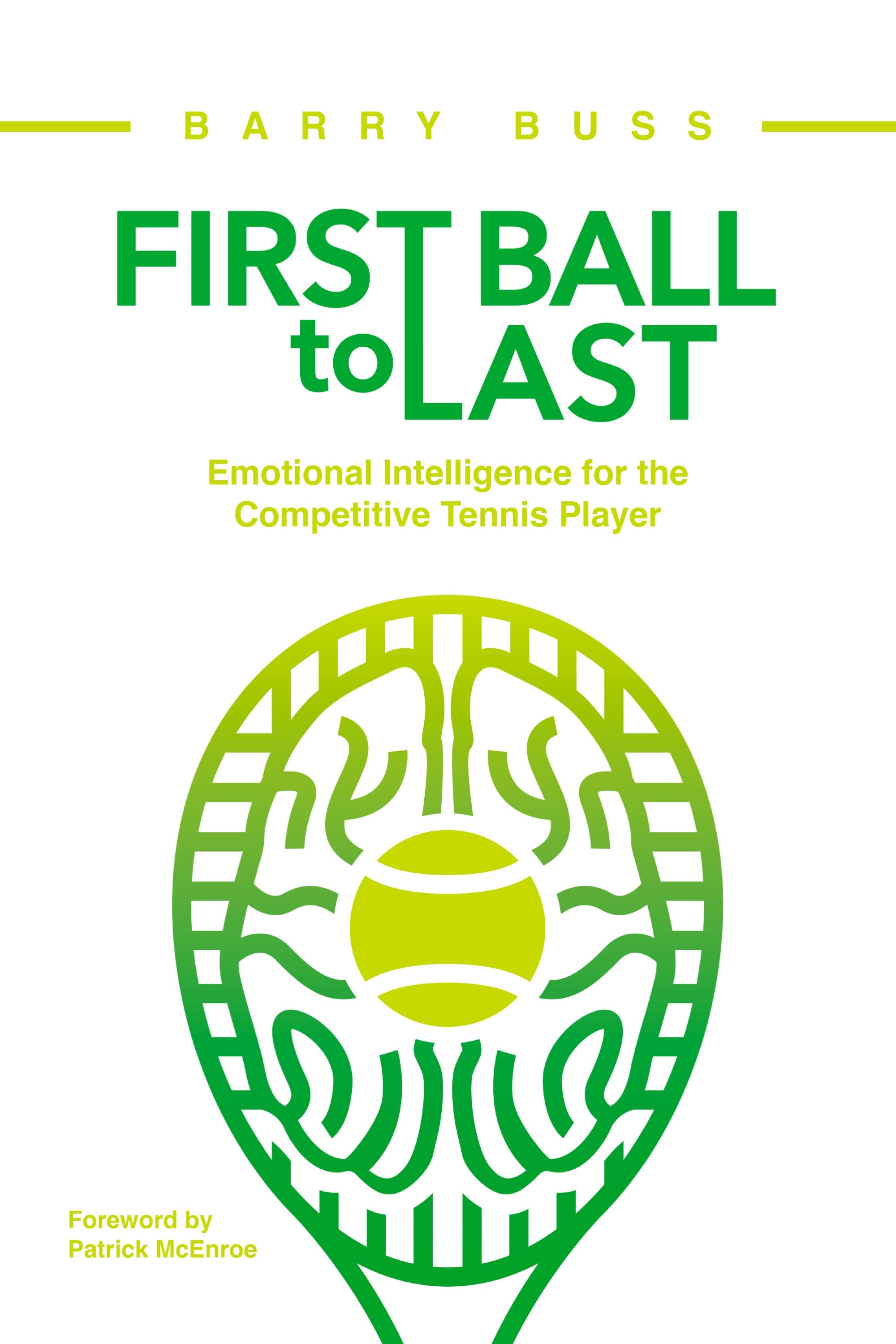
At FBTL, we believe it pays to invest in emotional intelligence early—before things fall apart down the road.
Here is what often goes unsaid: your tennis journey will end, but your life will keep going. Your forehand will not pay the bills. Your UTR will not help you raise a child. No job interviewer will care about your junior ranking. But the emotional intelligence you gain on the court will follow you everywhere—into school, work, family, relationships, and all of life’s varied challenges.
Emotional intelligence is more than a tennis skill—it can give you a competitive advantage in all things in life. Build it now, and you will carry those strengths far beyond the court, ready for whatever challenges life throws at you.